Why People Are Leaving Portland, Oregon – The Truth Behind Oregon’s Migration
Table of Contents
- Introduction
- Net Migration in Oregon: Understanding the Real Numbers
- Reason One: Portland’s Changing Political and Safety Landscape
- Reason Two: Portland's Tax Burden
- Reason Three: Urban Livability Decline in Portland
- Reason Four: Housing Affordability Crisis in Oregon’s Major Cities
- Who’s Moving to Southern Oregon?
- Southern Oregon Market Reality
- Day to Day Life in Southern Oregon
- Is Southern Oregon the Right Fit for You?
- FAQs About Oregon’s Migration
- Final Thoughts: Why Southern Oregon Remains a Strong Option
Introduction
Oregon is currently in the headlines with a recurring narrative of people leaving the state and a population shift. This mass exodus is often portrayed as a statewide phenomenon, but the reality is more nuanced. The truth behind this migration trend depends heavily on the specific part of Oregon being discussed.
While there is a real exodus happening in some areas, particularly in Portland and Multnomah County, the situation in other parts of the state, such as Southern Oregon, tells a different story. For over 30 years, the relocation patterns have shown that while some regions experience population loss, others, like Southern Oregon, continue to thrive. The key to understanding why people are leaving Oregon is to consider the local context and ask, "Which Oregon?"
VIEW HOMES FOR SALE IN SOUTHERN OREGON
Net Migration in Oregon: Understanding the Real Numbers
Most of the news coverage relies on a number that can be misleading if you do not understand what it measures. The headline count of people “fleeing” a state means almost nothing without looking at net migration.
Net migration is simply:
- People moving in minus people moving out
In Oregon, the state’s net migration ranking dropped dramatically. It went from 2nd in the country in 2016 to 45th in 2023. That is a real shift.
But here is what headlines rarely tell you: the change is overwhelmingly tied to Portland and the surrounding metro area.
Multnomah County lost over 15,000 more people than it gained between 2020 and 2024, and it was the only Oregon county that had net negative migration over that span.
About half of Oregon’s population lives in the greater Portland metro area. So, when that one region starts shedding residents, the state-level numbers look dramatic even if other parts of Oregon are behaving very differently.
When you zoom in and look at places like Jackson County (Medford and Ashland) and Josephine County (Grants Pass), you often see a different story altogether. That is where the “exodus” headline breaks down.
Reason One: Portland’s Changing Political and Safety Landscape
Let’s talk about the first major reason people move. It is uncomfortable, but it comes up constantly in relocation conversations.
Reason number one is the reality of Portland’s political scene and the social conditions people associate with it.
For years, Portland had a reputation that was hard to beat. People came for the craft beer culture, the tech energy, and the quirky progressive identity. Even the “Keep Portland Weird” slogan felt like a unifying Oregon vibe.
But over time, the perception shifted. Instead of quirky and progressive, many former and prospective residents describe Portland as a place driven by extreme activism and constant tension. They point to what they see in the news, including images and stories of vandalism, disruptions, and escalating conflict.
From an economic perspective, the “social issue” conversation turns into a business survival conversation fast.
Downtown commercial vacancies have been reported at over 30%. Commercial real estate values have dropped by more than 50% from their peaks. And people describe a downtown scene where big brands are pulling back, not just small shops.
This creates a chain reaction:
- Businesses close or reduce hours
- Downtown becomes less attractive to families
- Small business owners struggle to manage security and safety concerns
- Residents feel like the city is not responding in a way that restores stability
The part that keeps coming up is not just politics as an abstract debate. It is the family experience. Parents who once loved taking kids downtown to places like Powell’s Books, OMSI, or the Rose Garden say they no longer want to expose their children to that level of chaos.
That is the emotional driver behind a lot of “we are leaving Portland” conversations. It is not nostalgia. It is protection. People want a place where they feel safe and stable, where daily life feels predictable again.
Reason Two: Portland's Tax Burden
For many movers, the tipping point is not only what they see outside. It is also what they feel in their bank accounts.
Reason number two is the Portland area tax burden.
Portland’s top marginal income tax rate is cited at 13.9%, which is ranked behind only New York City. Add to that the layer of local measures enacted over time, and the burden becomes a constant background factor in household budgets.
As the claims go, since 2009 there have been at least 20 major taxes enacted on Portland area residents and businesses, with additional efforts continuing.
One of the most telling signals in the relocation story is that the average income of households leaving Multnomah County is described as higher than the average income of households arriving. In plain terms, this suggests that higher earners are disproportionately leaving and taking their tax base with them.
Now the critical part for anyone considering Southern Oregon: this tax story is heavily Portland and Multnomah County specific.
Local taxes that are described as contributing to the exodus include items like metro supportive housing service taxes and a Multnomah County preschool for all income surtax, plus layered local income taxes. The claim is that these do not exist in Jackson and Josephine Counties the way they do north.
So when someone buys a home in Medford , Ashland, Grants Pass, Jacksonville , or nearby communities, they are typically in a different tax jurisdiction with a different structure. State income tax still applies statewide, but the layered local setup that fuels “paying more for less” concerns is not described as a Southern Oregon reality.
Reason Three: Urban Livability Decline in Portland
It is easy to get trapped in the idea that this is only a safety or politics story. But the third reason people cite goes deeper than what you see in a news headline.
Reason number three is a perceived collapse of urban livability.
This is where the conversation becomes more measurable, at least in how people interpret market signals.
Downtown Portland has been cited with an office vacancy rate of 34.6%, compared with what many would consider a more healthy range of 10% to 15%.
Homelessness numbers are described as among the highest in the country, affecting how residents and businesses experience the city daily.
There is also a resident sentiment data point referenced from January 2026 by DHM Research, associated with the Portland Metro Chamber’s independent research efforts. The figure shared is that only one in four Portland area residents say the area is on the right track, and more than half report that they are personally worse off economically than a year earlier.
Even if you do not agree with every interpretation, the pattern is consistent: people are not just reacting to one dramatic event. They are reacting to a sustained decline in how the city feels to live in.
Now, does any of that map neatly onto Southern Oregon?
No, and that is a huge part of the “why people are leaving Oregon” story. Southern Oregon communities like Medford, Ashland, Grants Pass, and Jacksonville exist in a different world. They are smaller. They have their own economies and identity. And the scale of the problems that drive Portland moves does not show up the same way 300 miles south on I-5.
In other words, the exodus narrative does not automatically mean the same lifestyle tradeoffs apply everywhere in Oregon.
Reason Four: Housing Affordability Crisis in Oregon’s Major Cities
If there is one reason that tends to be underreported in “Oregon is collapsing” headlines, it is affordability.
Reason number four is housing becoming genuinely unaffordable, especially in markets like Portland and Bend and parts of the coast.
The median home price across Oregon is cited at around $510,000. In Portland and Bend, the median is described as higher.
For long-time residents who did not buy during the low interest years around 2020, or first-time buyers trying to enter the market later, the math simply stops working. That is how affordability turns into forced decisions: people either stay in place and feel squeezed, or they leave because there is no reasonable path forward.
But here is the twist that matters: affordability is also an argument for Southern Oregon, not against it.
Medford’s median home price in early 2026 is described at about $400,000 to $410,000, roughly $100,000 below the statewide average. In Grants Pass and Josephine County, you can still find detached single-family homes under $350,000, as described.
For someone coming from Portland, Seattle, Southern California, or other West Coast markets, Southern Oregon does not feel like a compromise. It can feel like one of the last places on the West Coast where you can still:
- buy a home
- have outdoor access
- experience four seasons
- live in a smaller, genuinely friendly community
This is also why people are arriving in Southern Oregon even while other parts of Oregon struggle. When households move, they are not only chasing views and weather. They are chasing the ability to build a life without being house poor.
Who’s Moving to Southern Oregon?
Once you understand why people are leaving Oregon, the next question is what brings people in. In this relocation-focused view, three groups stand out.
California Equity Buyers
This group sells a home in the Bay Area, Los Angeles, San Diego, or similar high-cost markets. They pocket equity, often described as $600,000 or even $1 million, and then use that advantage to buy in Southern Oregon.
The purchase story is consistent. A view property in East Medford. A walkable home near the plaza in Ashland. Riverfront living in Grants Pass. Something close to historic downtown Jacksonville.
Retirees and Pre-Retirees
Southern Oregon has been a retirement destination for decades, and that trend is described as accelerating.
Why? The list mentioned is straightforward:
- strong healthcare access, including Asante Three Rivers Regional Medical Center being named a Forbes top hospital for 2026
- mild climate with four seasons and year-round sun
- wine country, described as ranked number two in the United States
- world-class outdoor recreation like the Rogue River and Crater Lake National Park
- arts and culture in places like Ashland and Jacksonville, including the Oregon Shakespeare Festival and Britt Festival
And importantly, the argument is that retirees can still live comfortably on a fixed income compared with many other regions.
Remote Workers
Remote workers have options. They can compare multiple West Coast markets. In this story, they choose Southern Oregon because the lifestyle feels authentic, the community is tight-knit, and the value remains strong relative to other destinations.
Southern Oregon Market Reality
Another reason Southern Oregon has stayed resilient is supply and demand dynamics.
In 2024, only 350 new homes were constructed in Southern Oregon according to the figures shared. That is not a claim that no building happens, but it suggests supply is limited relative to what people want.
The claim also is that home values in Jackson and Josephine Counties held firm through 2025, with pockets seeing solid appreciation. While other markets are described as tanking, Southern Oregon is presented as stable over the last four years.
In practical terms, this means that people who arrive can sometimes do so at price points that other West Coast markets stopped offering years ago, and the upside becomes difficult to find elsewhere.
Day to Day Life in Southern Oregon
One theme shows up over and over with clients. It is not only that Southern Oregon offers better affordability.
The surprise is how much better the day-to-day quality of life feels than expected.
People mention things like:
- clean air
- real community
- friendly people
- no traffic gridlock
- outdoor access within minutes of home
In other words, the lifestyle is not a slogan. It is the routine.
Is Southern Oregon the Right Fit for You?
Here is where the honest conversation matters again. Southern Oregon is not a fit for everyone, and that needs to be said clearly.
If your job depends on you being in a major city like Portland, or your lifestyle depends on the density, services, and urban amenities of a big metro, then the tradeoffs may not work for you.
But if you are looking for what Southern Oregon offers, this is described as one of the best times in recent years to make a move, because:
- prices are still relatively reasonable
- inventory is better than it has been in a long time
- the market is stable
Of course, that window will not stay open forever, because markets change.
More Than Just a Region: The Community You Pick Matters
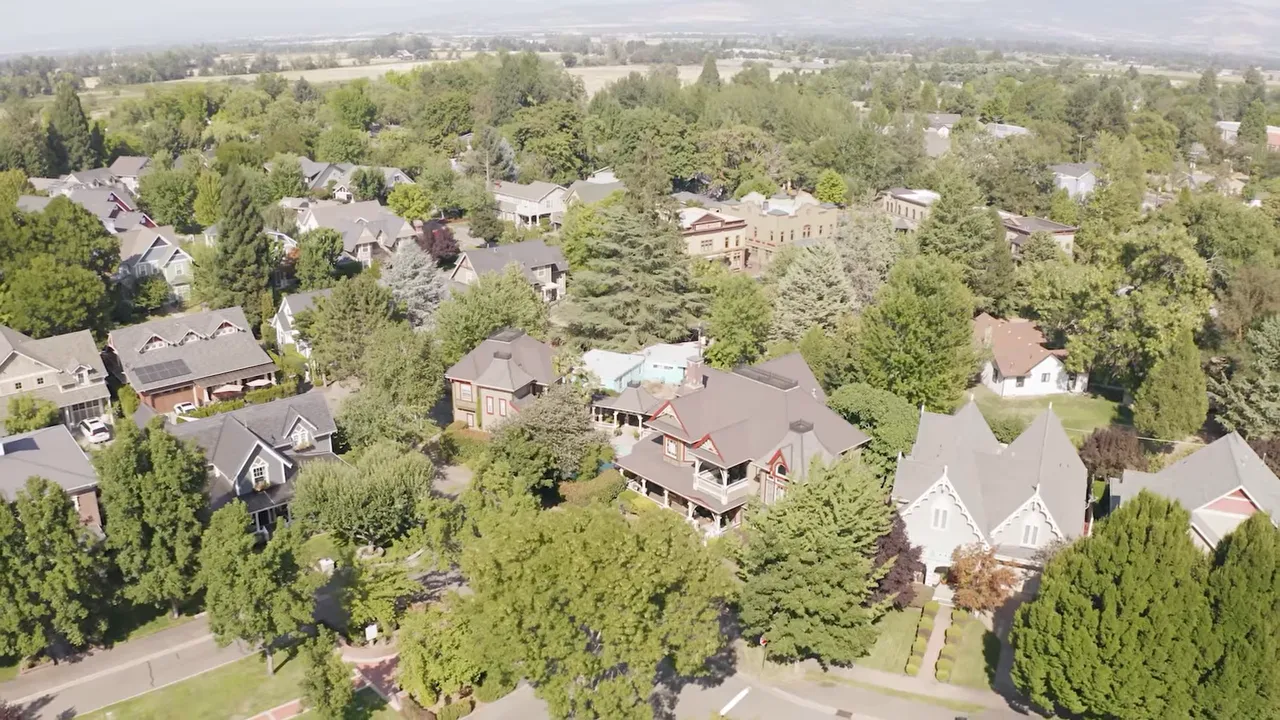
Deciding Southern Oregon is the first step. The second step is just as important: the specific community you choose changes your everyday reality.
It affects things like:
- schools
- commute patterns
- proximity to healthcare
- long-term equity outcomes
VIEW HOMES FOR SALE IN SOUTHERN OREGON
FAQs About Oregon’s Migration
Why people are leaving Oregon mostly means leaving Portland, right?
In many cases, yes. Oregon’s net migration drop is described as being heavily driven by Portland and Multnomah County, not every part of the state. Counties outside the Portland metro area often have a different pattern.
What is net migration and why does it matter for why people are leaving Oregon?
Net migration is people moving in minus people moving out. Headlines about total numbers can be misleading, but net migration helps show whether a place is truly gaining or losing residents.
Are politics and safety the only reasons people move out of Portland?
No. The relocation story here includes a broader mix: perceived changes in livability, business decline, and a feeling of paying more for less through taxes and ongoing costs.
Is Southern Oregon’s cost of living really different from Portland?
The affordability comparison presented is that Southern Oregon home prices can be meaningfully lower than statewide medians and that some local tax layers tied to Portland do not exist in the same way in Jackson and Josephine Counties.
Who is most likely to move to Southern Oregon right now?
The groups highlighted are California equity buyers, retirees and pre-retirees, and remote workers who can choose where they live and want a strong lifestyle value.
Does Southern Oregon have market stability?
The stability claim shared is that home values in Jackson and Josephine Counties held firm and some pockets appreciated, while supply stayed relatively limited, helping demand meet constraints.
If I only care about urban amenities, should I still consider Southern Oregon?
If you require big city services and density for your career or lifestyle, Southern Oregon may not match your needs. The tradeoff is fewer urban amenities in exchange for community feel, lower traffic, and easier access to outdoor life.
Final Thoughts: Why Southern Oregon Remains a Strong Option
If you are trying to make sense of why people are leaving Oregon, the biggest lesson is to stop treating “Oregon” as one market with one lived experience. The exodus narrative is real, but it is concentrated, and it often tracks back to Portland and Multnomah County.
Southern Oregon, by contrast, is described as thriving for a different reason: people can still get affordability, community, outdoor access, and day-to-day quality of life in a way that feels increasingly rare elsewhere on the West Coast.
Thinking of relocating to Southern Oregon? Call us at 541-954-7758 to learn more about your options and the local real estate market!
READ MORE: Moving to Southern Oregon From Out of State: Areas to Approach With Caution

Buying Southern Oregon
At Buying Southern Oregon, we are a dynamic team dedicated to helping you achieve your real estate goals. Combining Brian Simmons’ deep market expertise and Josh Berman’s strong negotiation skills, we provide personalized service and local knowledge to ensure a seamless and rewarding experience. Whether you’re buying, selling, or relocating, we’re here to guide you every step of the way and make your Southern Oregon real estate journey a success.
Watch Our Latest Video