This $180 Million Project Will Change Southern Oregon FOREVER!
There are a lot of meaningful projects happening around Southern Oregon right now. Rogue X is becoming a major sports destination. Fiber internet is reaching more rural parts of Jackson and Josephine counties. New housing is going up in South Medford and Eagle Point. Downtown revitalization and road projects are moving forward in Medford and Grants Pass.
Any one of those could be a headline story in a smaller town. But three projects stand out because they have the potential to shape the Rogue Valley at a much larger level: downtown identity, healthcare access, and regional connectivity.
That matters whether you already own a home here, are evaluating an investment, or are seriously thinking about moving to Southern Oregon. These are the kinds of investments that can influence jobs, lifestyle, business activity, long-term demand, and ultimately the way people view the entire region.
Key Takeaways
- The Creekside Quarter offers major downtown Medford upside, but its scope and stadium location remain uncertain.
- Asante's roughly $1 billion facilities plan is expanding regional healthcare capacity across Jackson and Josephine counties.
- Rogue Valley International Medford Airport's terminal expansion is the most certain project and could nearly double passenger capacity.
- These investments support long-term connectivity, healthcare access, jobs, and regional demand for Southern Oregon living.
Table of Contents
- Why These Major Southern Oregon Projects Matter
- Number Three: Creekside Quarter in Downtown Medford
- Number Two: Asante’s Regional Healthcare Expansion
- Number One: Rogue Valley International Medford Airport Expansion
- What Airport Expansion Could Mean for Southern Oregon
- What These Projects Mean for Moving To Southern Oregon
- What These Projects Signal About Rogue Valley Growth
Why These Major Southern Oregon Projects Matter
Big regional changes rarely arrive all at once. Usually, improvements stack up gradually over a decade and people barely notice the bigger pattern until it is already obvious.
Right now, though, Southern Oregon has multiple major investments moving at the same time. A hospital system is deep into a billion-dollar facilities plan. Medford is studying a potentially transformative downtown project. And Rogue Valley International Medford Airport is pursuing a terminal expansion that could nearly double its capacity.
None of that guarantees instant home-price movement in a particular neighborhood. That is not how this works. The broader impact is more subtle and more durable. Better infrastructure can make Southern Oregon more viable for businesses, retirees, families, remote workers, frequent travelers, and people who want the lifestyle here without feeling disconnected from the rest of the country.
The three projects below are ranked by a mix of scale, certainty, and long-term regional impact.
Number Three: Creekside Quarter in Downtown Medford
The Creekside Quarter is probably the most exciting project on the list from a downtown redevelopment perspective. It also carries the most uncertainty.
The broad vision is a roughly $500 million transformation near downtown Medford that could include a regional conference center, hotel, minor league baseball stadium, retail and office space, a parking structure, Bear Creek restoration, and a riverwalk. A feasibility study projected approximately $750 million in local wages and up to $1.5 billion in total economic impact over time if the project comes together as envisioned.
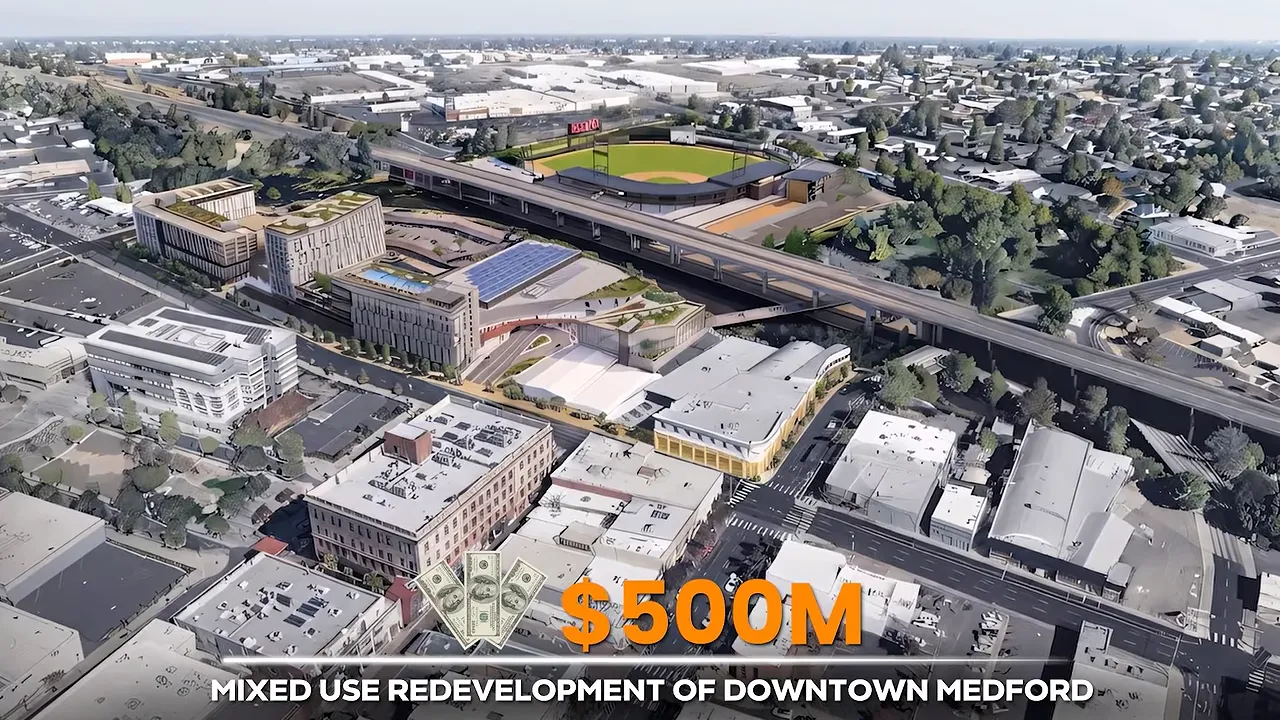
That is a massive upside scenario. But it is important to keep the distinction between a compelling vision and a fully committed project clear.
What Has Already Moved Forward
Medford voters passed Measure 15-238 in November 2025, increasing the city lodging tax from 11 percent to 13 percent. That measure is active and intended to help support the project.
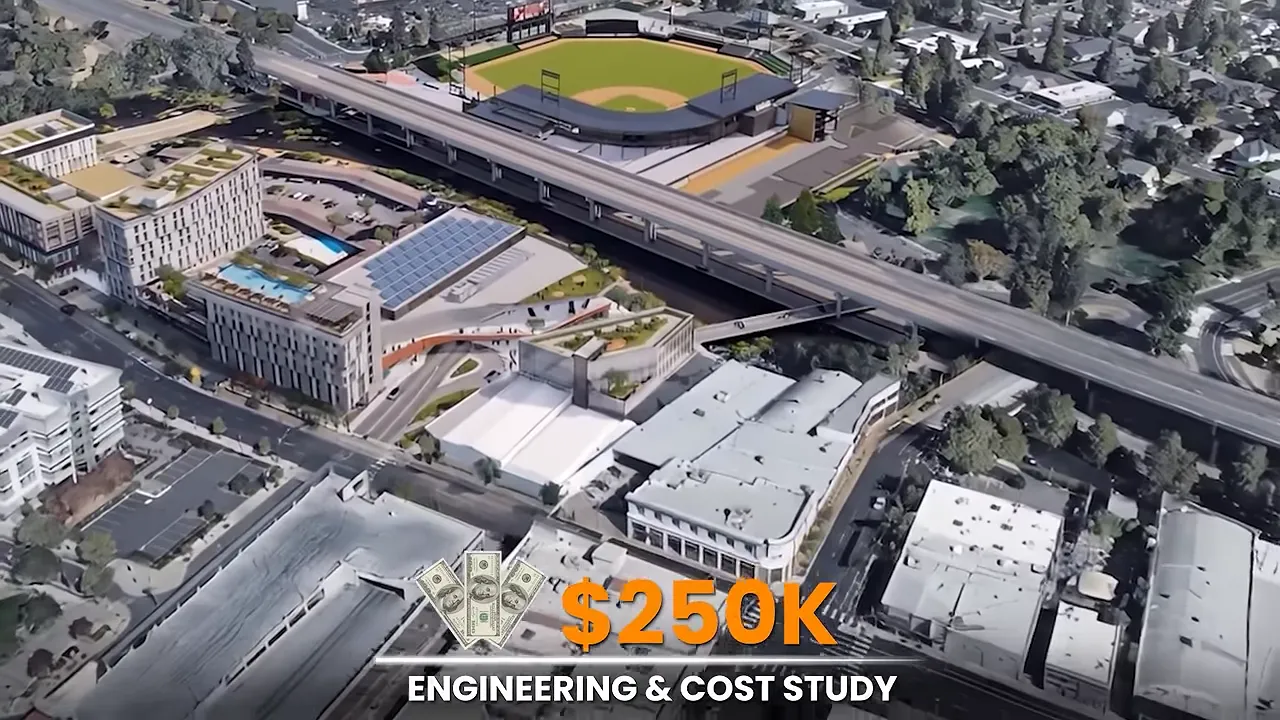
The stadium conversation is also moving. The City of Medford committed $250,000 toward an engineering and cost study, with the funding split alongside the ownership group behind the Eugene Emeralds. The study is comparing two potential stadium paths:
- The original Hawthorne Park location near downtown Medford.
- A renovation of the existing Harry and David baseball field.
The study is expected to wrap up at the end of October 2026 and should provide more concrete numbers, including what the Emeralds ownership group may be willing to contribute.
Why The Stadium Location Changes The Story
If the project lands at Harry and David Field, it could still be a meaningful baseball facility improvement. That site already functions as a ballpark, however, so the broader effect on downtown Medford would likely be limited.
Hawthorne Park is a different story. The original concept could create the kind of environment where people attend a game, walk a few blocks for dinner or a drink, spend time by Bear Creek, and bring consistent activity into an area that needs more energy and foot traffic.
There is a reason the original concept is so compelling. A well-designed stadium, creek restoration, hotel, conference space, and walkable connection to historic downtown could reshape the identity of this part of Medford. In the best-case version, it has some of the placemaking potential people associate with Bend's Old Mill District.
Still, this one belongs at number three because the private conference center and hotel component has not been firmly confirmed. There was no signed agreement or confirmed site for that portion in the most recent city update. The Creekside Quarter has the highest potential upside on this list, but it remains the least certain.
Number Two: Asante’s Regional Healthcare Expansion
This may be the least flashy project on the list, but for everyday life, it could be the most important.
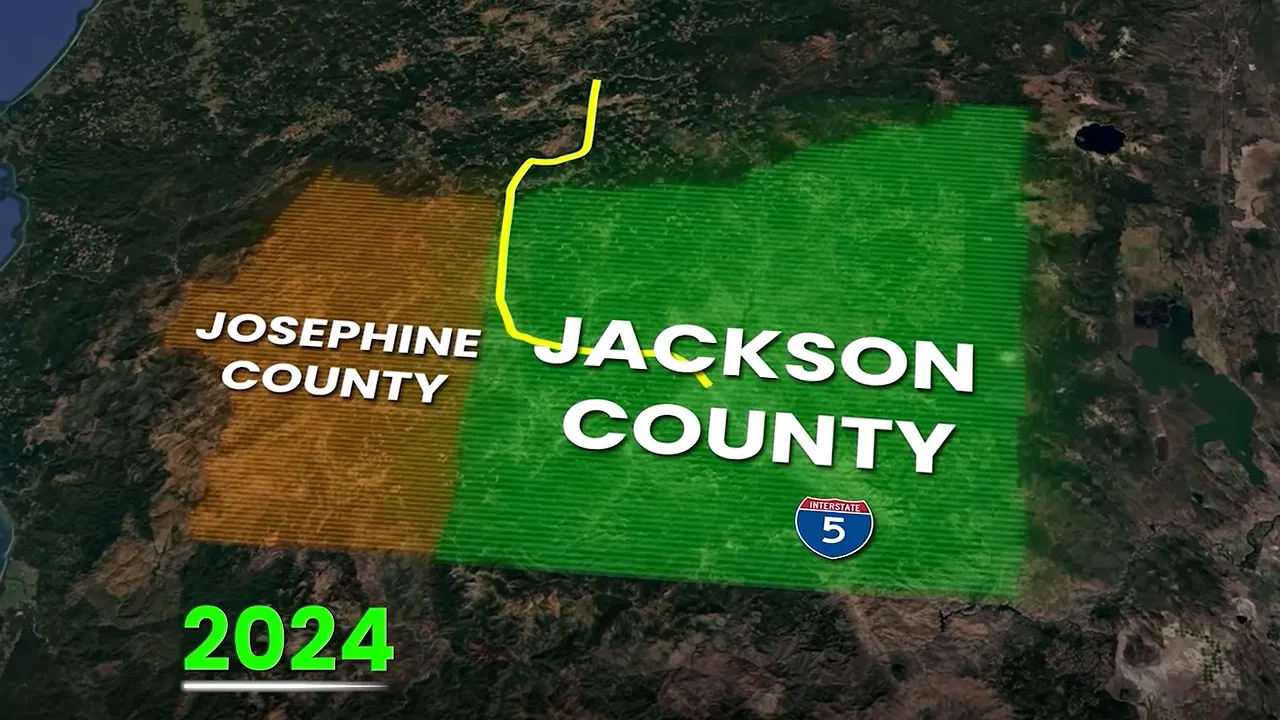
Asante is Southern Oregon's dominant healthcare system and is approximately six years into a roughly 10-year, $1 billion facilities plan across Jackson and Josephine counties. Unlike a stadium concept or a future redevelopment proposal, much of this work is already built, operating, and serving patients.
What The Asante Investment Includes
In 2024, Asante opened a $420 million patient pavilion at Rogue Regional Medical Center in Medford. The facility is more than 300,000 square feet and was funded in part by nearly 8,000 community donors through the largest philanthropic campaign in the region's history.
The project added a six-story patient bed tower, expanded intensive care capacity, and increased operating room capacity to approximately 20 rooms.
- In 2026, a cardiac expansion at Rogue Regional Medical Center is scheduled for completion in the fall.
- The cardiac project includes six new catheterization labs and 30 prep and recovery rooms.
- Ashland Community Hospital is transitioning into a satellite campus of Rogue Regional Medical Center, preserving emergency department and outpatient services.
- Family House in Grants Pass is expanding to support families whose loved ones need treatment away from home.
This is steady infrastructure, and steady infrastructure is often what matters most when someone is considering a long-term move. If retirement is part of the plan, if aging parents may eventually need to be nearby, or if healthcare access is a major lifestyle consideration, this expansion deserves serious attention.
Rogue Regional Medical Center and Three Rivers Medical Center in Grants Pass both earned five-star recognition on Forbes' 2026 top hospital list. Rogue Regional has also appeared on Fortune's list of top cardiovascular hospitals in the country for multiple years.
Southern Oregon healthcare is often underestimated by people considering the region from out of state. The reality is that there is a legitimate regional system here, and it is investing heavily in modern capacity, cardiac care, emergency services, and patient facilities.
Number One: Rogue Valley International Medford Airport Expansion
The biggest long-term project in Southern Oregon right now is the terminal expansion at Rogue Valley International Medford Airport.
This is not close, in my opinion. The airport project is the most funded, the most certain, and the most directly connected to the future growth of the entire valley. The planned expansion would nearly double the size of the current passenger terminal.
Why The Airport Has To Expand
Rogue Valley International set an all-time passenger record in 2025, serving more than 1.1 million passengers. That was a 6.5 percent increase over the prior year. In March 2026 alone, the airport handled nearly 83,000 passengers, up another 6 percent year over year.
Airport officials anticipate the region will need capacity for roughly 2 million passengers annually by 2042. That is nearly double current volume in less than two decades.
The existing terminal was built in 2009 and designed around a smaller generation of regional aircraft. Airlines now use larger planes that need more gate capacity, counter space, and terminal infrastructure. The airport is already Oregon's third busiest, behind Portland and Eugene, and serves an estimated catchment area of about 600,000 people across Southern Oregon and Northern California.
The problem is not simply comfort or curb appeal. Every airline ticket counter at the Medford airport is currently in use. There is no available counter space for another airline to set up service tomorrow, even if it wanted to. The terminal expansion is a practical requirement for future carriers and additional routes.
How The Airport Expansion Is Funded
The airport expansion is in active procurement, with construction targeted as early as the end of 2026. Public funding is a major reason this project carries more certainty than the Creekside Quarter.
Funding sources include FAA terminal expansion grants and Oregon's Connect Oregon program. There is also a separately funded $12.5 million east apron expansion already underway. That project will increase ramp space for larger international, military, and wildfire tanker aircraft. The current apron can barely accommodate one large aircraft at a time, while the expanded configuration is intended to create room for about four.
In April 2026, the FAA announced $27 million in funding across 26 Oregon airports, including Rogue Valley International, Ashland, Grants Pass, and Klamath Falls for infrastructure repairs and upgrades.
What Airport Expansion Could Mean for Southern Oregon
More terminal capacity does not automatically mean nonstop flights everywhere. It does mean the airport can physically support more airlines, gates, counters, and routes. That creates opportunity where there is currently a hard space constraint.
Medford currently has service from Alaska, Allegiant, American, Delta, and United. Avelo has also entered the market with nonstop Burbank service.
The Most Concrete Route Possibility
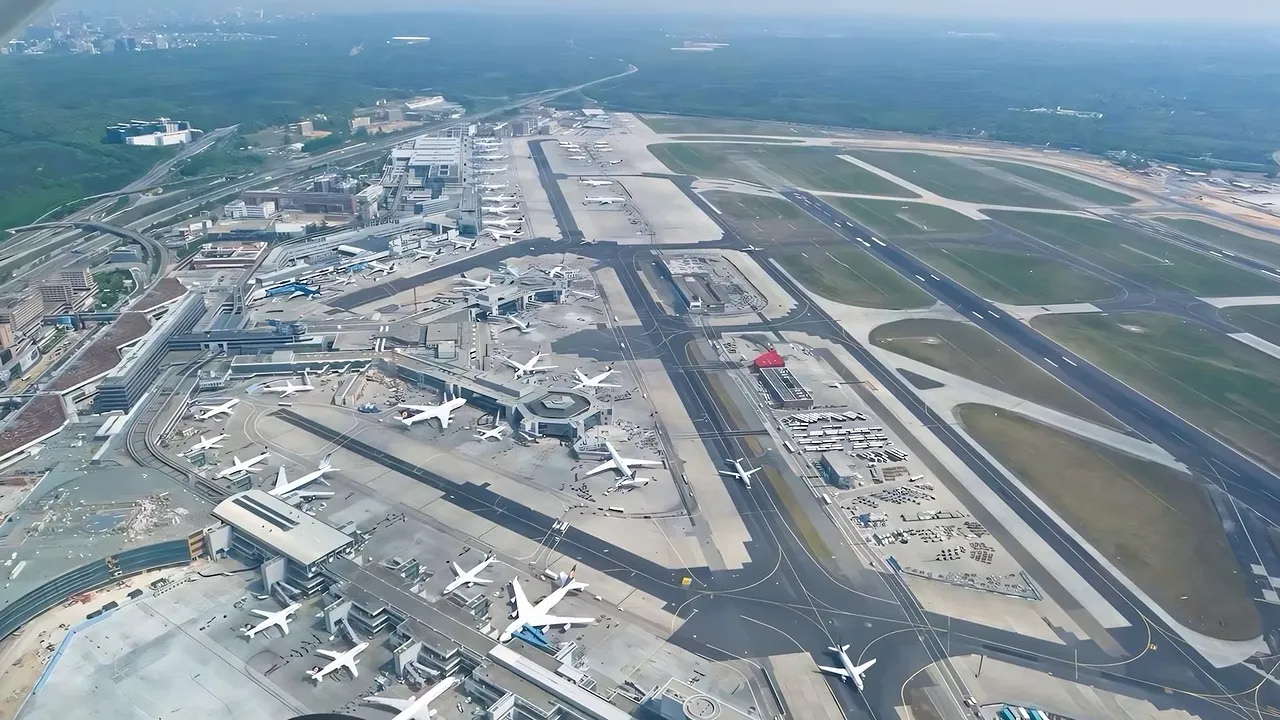
The closest thing to a confirmed future route is a potential American Airlines nonstop connection to Dallas Fort Worth. The airport received a $600,000 federal grant specifically for a revenue guarantee and marketing plan for that route, and American Airlines submitted a formal letter of support during the grant process.
If established during the three-year window, a Dallas Fort Worth route could improve one-stop access to the Southeast, South America, and other destinations through American's Texas hub.
Likely And Less Certain Airline Opportunities
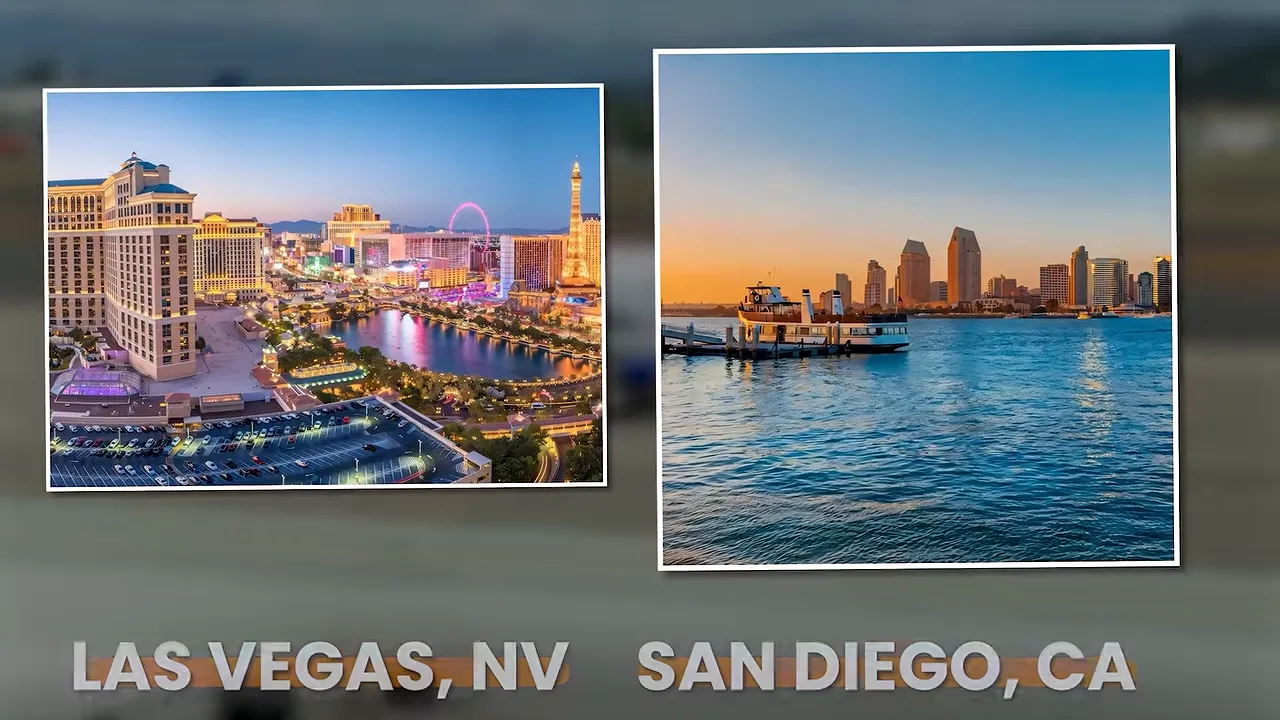
Avelo may be a candidate to add another route after entering the Medford market. Its business model is built around underserved airports and low-cost point-to-point flights. Las Vegas, San Diego, or another Southern California destination are logical possibilities, although no additional route has been announced.
Alaska Airlines is another strong possibility for continued growth because it has long been Medford's dominant carrier and has a track record of adding routes. The airline recently added San Diego service and could eventually bring another West Coast destination into the mix.
Southwest is the airline people ask about constantly. There is no formal Southwest announcement. Still, the firm working on Medford's terminal expansion also worked on Eugene Airport's expansion and was involved in bringing Southwest into that market. The honest issue is simple: Medford needs additional counter space before Southwest, or another new carrier, can realistically establish operations.
Longer-term Midwest hub service through United or Delta, potentially to places such as Chicago, Minneapolis, or Detroit, would likely depend on the complete multi-phase airport buildout and passenger volume moving toward the 2 million annual passenger forecast.
Direct Hawaii or Cabo service would be incredible, but that is not a realistic near-term expectation. The important point is not to overhype speculative routes. The real win is building the capacity that makes additional service possible in the first place.
What These Projects Mean for Moving To Southern Oregon
If you are moving to Southern Oregon, the biggest benefit may not be a single new amenity. It is the combination of better connectivity, expanding healthcare, additional housing, and more investment in the local economy.
Airport capacity matters a lot for people who want to be close to family in California, Phoenix, Seattle, or elsewhere. Direct flights and easier connections can make the decision to relocate much more comfortable, especially for people who expect to visit children, grandchildren, friends, or business contacts regularly.
The hospital expansion matters most for retirees, people with aging parents, and families who place a high value on access to emergency and specialty care. The Creekside Quarter matters most for buyers willing to accept uncertainty in exchange for potential upside near Hawthorne Park and downtown Medford.
For homeowners, the airport expansion should not be viewed as a promise that one specific neighborhood will suddenly jump in value. The more realistic impact is regional. Better airline access can support business travel, hotels, restaurants, rental cars, construction work, airline staffing, TSA jobs, retail jobs, and long-term economic demand.
That is what supports home values over time: a broader pool of people and businesses who see Southern Oregon as a practical place to live, work, invest, and stay connected.
What These Projects Signal About Rogue Valley Growth
Look at the pattern rather than any one headline. Airports do not nearly double capacity because leadership expects a region to decline. Hospital systems do not put approximately $1 billion into facilities in a fading market. National homebuilders do not build hundreds of homes in South Medford and Eagle Point because they expect demand to disappear.
Southern Oregon is investing in the categories that hold up over the long run:
- Connectivity through airport infrastructure.
- Healthcare capacity through regional hospital investment.
- Downtown identity through potential redevelopment near Bear Creek and Hawthorne Park.
- Housing supply through new residential construction.
The flashy projects get attention. A stadium rendering is exciting. A giant pickleball complex is fun to talk about. But the airport terminal and healthcare system are the kind of projects that can influence a region for decades.
That is why these three matter. They point toward slow, sustained regional growth instead of a short-lived trend. And that is a much healthier foundation for anyone making a long-term decision about living, buying, selling, or investing in Southern Oregon.
Whether you're relocating to Southern Oregon for a new job, looking for a better lifestyle, or planning your retirement, choosing the right community can make all the difference. From Medford and Ashland to Grants Pass, Eagle Point, and the surrounding Rogue Valley, each area offers something different when it comes to housing, healthcare, outdoor access, and everyday living.
If you're considering a move or planning your retirement in Southern Oregon, I can help you understand the communities, neighborhoods, and housing options that fit your goals.
Call or text me directly at 541-954-7758 to talk about your relocation or retirement plans and find the right place to call home in Southern Oregon.
Frequently Asked Questions About Southern Oregon Growth Projects
What is the biggest development project in Southern Oregon right now?
The Rogue Valley International Medford Airport terminal expansion is the biggest project in terms of long-term regional impact, funding certainty, and potential to nearly double airport capacity.
What is the Creekside Quarter project in Medford?
Creekside Quarter is a proposed downtown Medford redevelopment concept that could include a conference center, hotel, minor league baseball stadium, retail, office space, parking, Bear Creek improvements, and a riverwalk.
When could Medford Airport construction begin?
Construction is targeted to begin as early as the end of 2026, based on the active procurement process and publicly available project information.
Why does healthcare matter when moving to Southern Oregon?
Healthcare access is especially important for retirees, families with aging parents, and anyone seeking dependable emergency or specialty care. Asante's major facilities plan is expanding regional capacity, including cardiac services, patient beds, operating rooms, and family support housing.
Read More: Moving to Southern Oregon: How to Choose a Lifestyle You Will Still Love Years From Now

Buying Southern Oregon
At Buying Southern Oregon, we are a dynamic team dedicated to helping you achieve your real estate goals. Combining Brian Simmons’ deep market expertise and Josh Berman’s strong negotiation skills, we provide personalized service and local knowledge to ensure a seamless and rewarding experience. Whether you’re buying, selling, or relocating, we’re here to guide you every step of the way and make your Southern Oregon real estate journey a success.
Watch Our Latest Video