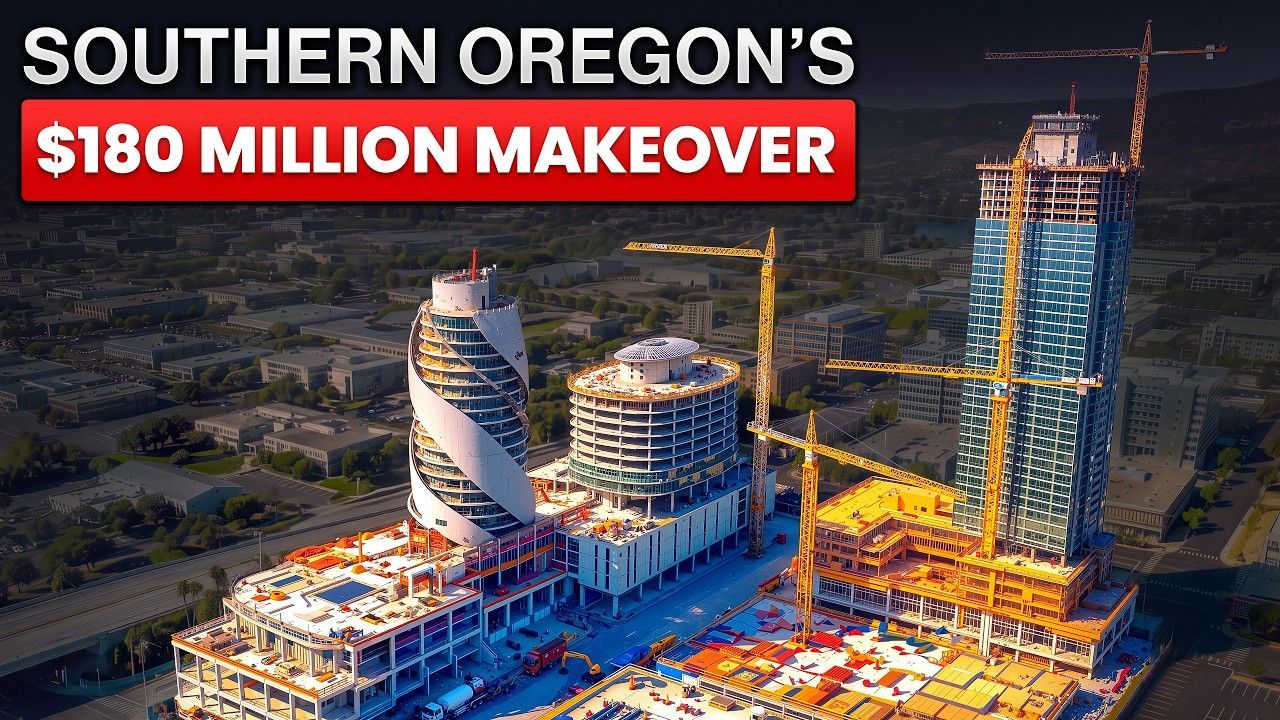
Southern Oregon Real Estate Market Predictions: What to Expect
A couple of weeks ago, I was chatting with a retired teacher and fire captain from Seattle who've been planning their move to Southern Oregon for years. The wife asked me point-blank: "Brian, rates just went back over 7%. Should we wait for the crash?" I had to laugh a little. The crash. The one everyone keeps talking about because it's been more than a decade since we've had any real correction, and rates are high, and inventory's climbing, and on and on.
I get it. When you're about to make one of the biggest financial moves of your life, you want to know if the floor's about to fall out. So I pulled up the numbers while we were on the phone. In the fall of 2023, rates hit 7.8%, the highest in over two decades. That was the exact moment when markets around the country were experiencing big corrections. The median sold price here in Southern Oregon, comparing the end of 2023 to the end of 2022? It moved up by about $700. Not significant, but it was up.
There was silence on the other end. "$700? Like, total?" Yeah, total. At the time the news would have you believing the housing market was crashing down in flames across the country, the median sold price in Southern Oregon actually went up.
I'm Brian Simmons with the Buying Southern Oregon team. I've lived here for over 30 years and closed hundreds of transactions in this valley. Today I'm going to walk you through what happened here over the past year, how we stacked up locally against markets like Austin and Boise when rates spiked, where I think this market goes over the next 12 months, and the three questions that will determine all of it. I'm going to explain it using a fun local landmark as an analogy: Crater Lake. Stick with me, it's going to make sense.
Table of Contents
Southern Oregon: The Crater Lake Market

If you've never been to Crater Lake, put it on your list. About an hour and a half from Medford, the first time you walk up to the rim and see that beautiful blue water, it stops you dead in your tracks. But here's what most people don't know about Crater Lake: it has no rivers flowing into it and no rivers flowing out of it. Every drop of water in that lake falls straight out of the sky, rain or snow, around 42 feet of snow a year up there. The only way water leaves is very slowly through evaporation or a tiny bit of seepage through the rocks. Because of that, the water level barely moves. Year after year, drought years, big snow years, it shifts a tiny bit and then settles right back to where it naturally sits.
Compare that to lakes you probably know in California and Nevada, Shasta Lake, Lake Oroville, Lake Mead, Lake Powell. Those are reservoirs. They depend on rivers pouring in from upstream and dams releasing water downstream. You've seen what happens. One dry stretch, one bad drought year, and you've got that giant bathtub ring around the shoreline, boat ramps sitting 100 feet above the waterline. Then a wet year comes next and they're spilling over. That's exactly what boom-and-bust housing markets look like: Phoenix, Boise, Austin. Markets where everything depends on the flow, cheap money flowing in, builders flooding the market with new supply, and then the whole thing drains the second market conditions change.
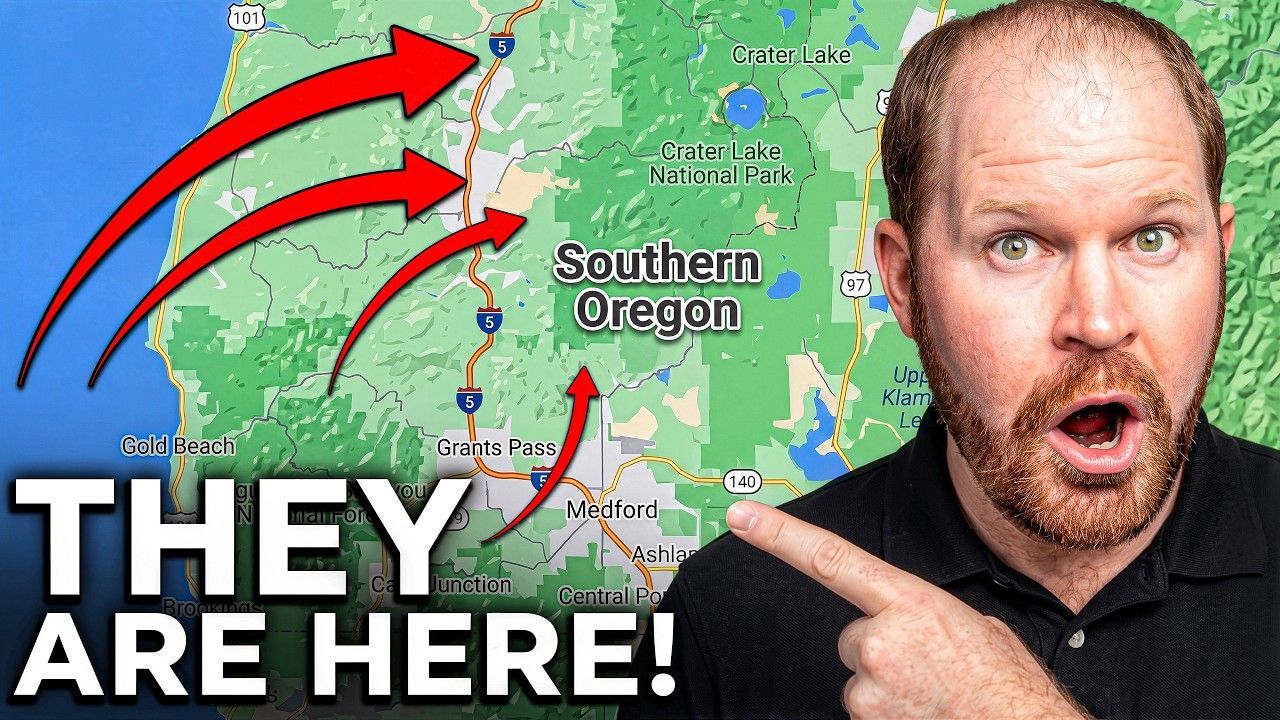
Southern Oregon works a lot more like Crater Lake. That's the whole video summed up in one analogy. Our buyers come from outside, a lot like the snow, retirees and relocating buyers who are moving here for the lifestyle. Many of them bring equity with them from California, Washington, Arizona, Nevada, Texas, and beyond. Many are paying cash outright, so they're showing up whether rates are 5% or 8%. On the supply side, nobody is pumping a new river into this valley. Oregon is one of the toughest states in the country to develop land. That's the walls of the caldera, so to speak, the urban growth boundaries around every one of our cities. When things slow down and maybe it's a low snow year, the water leaves slowly. That's the evaporation. It happens, lowers the level a little bit, but the lake still stays full. The key is that it's a stable environment that doesn't rely on inflow or outflow like those reservoirs do. The lake level remains stable whether it's a big snow year or a drought year, just like the Southern Oregon real estate market has proven to do.
Keep that picture in your head as we go through the rest of this article. We're going to come back to it a few times.
What Actually Happened Over the Last 12 Months
From October 2025 through September 2026, we closed about 3,400 single-family homes across Jackson and Josephine Counties. That's a little more than the 12 months before, so demand basically held steady, went up a tiny bit, actually. Prices also held up. If you look at the first nine months of 2026 compared to the same stretch last year, the median sold price went up about 2%. Nothing substantial, but it was up.
This last summer, July through September, the median landed right around $459,000. That's the highest quarter of the entire 10-year period of data I looked at. Think about that for a second. Rates spent most of this year climbing from right around 6% back in February to almost 7% by September, and our median price just set a new high mark.
Now, it hasn't been easy for every seller. Homes are generally taking a little bit longer to sell. This past winter, for example, the typical home was sitting on the market for around a month and a half before it went under contract, and sellers were getting around 95 cents on the dollar compared to their original asking price. That tells you a lot of folks started way too high and had to come down. We see this every single week. A seller who prices right on day one sells in a reasonable amount of time. A seller who prices based on what their neighbor told them they should list for sits there for months wondering why nobody's calling.
That's the backdrop to keep in mind: steady sales, firm prices, and a market that has been rewarding sellers who are realistic.
The 2023 Affordability Crisis: What Really Happened
Let's rewind, because to understand what's coming, you need to see what happened last time rates looked like this and made this quick run-up. Rates have climbed over 7% four separate times in the last four years. The first time was October 2022, the first time since 2002 that had happened. Then they went back over in late summer and fall of 2023 and stayed there for about four months straight. They crept back over again in spring of 2024, and they touched it again briefly in January 2025.
The one that matters most is the 2023 stretch, because that was the closest thing we've got to a worst-case scenario. Prices had just run up like crazy through the pandemic. The median went from about $325,000 at the start of 2020 to $446,000 by the summer of 2022. Then on top of those prices climbing, rates more than doubled. A home that was affordable based on a 3% rate back in 2021 was all of a sudden totally out of reach. Just to put a number on it: take a $446,000 house, put 20% down. At 3%, your principal and interest was about $1,500 a month. At 7.5%, it's almost $2,500. Same house, $1,000 more every single month because the rate went up.
If there was ever a time for prices to have cracked, it was right then. But what actually happened? For the year of 2023, the median sold price in Jackson and Josephine Counties came in about 2% lower than 2022. Then in the spring of 2024, rates went right back over 7%, and the median went up about 2.4% compared to the year prior. By the summer of 2024, it passed the old 2022 high. The worst affordability crunch in 40 years hit this valley, and the median price wobbled a couple percent and then kept going up.
What changed when we had that big affordability crisis? The number of sales is one thing. In 2021, we closed about 4,800 single-family homes across the two counties. In 2023, we had about 3,000. That's a drop of more than a third. That's the Crater Lake principle, the level of the lake, which is your home's value, barely moved at all. What changed was how much water was moving around. Fewer transactions, fewer people moving across town. The lake just got quieter, but it stayed full.
How Southern Oregon Compared to Other Western Markets
A 2% dip in median sold price doesn't mean much until you see what happened in other places over the same stretch. Another way to look at this is through the federal index from the Federal Housing Finance Agency (FHFA) that tracks the same homes selling or getting appraised more than once. It doesn't care whether buyers were picking bigger houses, smaller houses, this neighborhood or that neighborhood. It measures what happened to the value of the same house over time.
Let's look at the drop from the 2022 peak to the low point. Austin was down almost 13%. Boise down 9%. Sacramento 8% down. San Francisco about 8%. Seattle about 7%. Phoenix a little over 6%. What happened here? Medford was about 5.8%, and that low point lasted about one quarter, right at the start of 2023. Grants Pass was about 4%. The smallest dips on the board were those two.
But the part I really want you to see is where everybody is now. Compared to the 2022 peak, homes in Medford are worth about 7% more today than the 2022 peak. That's the best of anywhere on that list. San Francisco and Sacramento four years later are right about where they were in 2022. Austin is still down 11%, still waiting to get back to even. Southern Oregon was one of the steadier markets in the entire West through all of this. When people talk about the housing correction of 2022 and 2023, I want you to understand that a lot of that story happened somewhere else.
Why the Median Sold Price Is Misleading
I want to clear something up, because if you go look at a chart of the median sold price, you'll see that little dip in 2023 and you might think every home here lost a couple percent. That would be a reasonable assumption, and for most homes, it's wrong. The median sold price is just the middle of whatever happened to sell that month or year or whatever period we're looking at. It measures the mix of homes that sold, which is a different question from what your specific home is worth.
In 2023, that mix shifted. When payments jumped by $1,000 a month, a lot of buyers had to make a sacrifice. The couple who wanted the 2,200-square-foot house with a shop ended up buying the 1,700-square-foot house without a shop. The family that wanted East Medford ended up buying in South Medford. They still bought, they just bought what they could afford, which was less house than what they wanted. When enough people do that same thing, the middle of that sales pile slides down a little bit, and it shows up on a chart as a drop in the median sold price.
That same federal index backs this up. Remember, it tracks the same house selling multiple times in that same period. For the full year of 2023, the Medford area was down about 1% compared to 2022. Grants Pass was about 0.5%. But the median was down 2%. So roughly half of that median drop was simply because people were buying less expensive homes.
Twin Creeks: A Neighborhood Case Study
I wanted to take this a step further, so I went into our MLS and pulled every sale since 2019 in three neighborhoods where the homes are about as close to identical as you're going to get, same builders, same handful of floor plans, same streets. One of those was Twin Creeks in Central Point, where our office is located.
Adjusted for size, the Twin Creeks values in 2023 were flat with 2022 and about 8% higher than 2021. The number of sales in Twin Creeks dropped in half, from about 40 homes in 2021 to 20 homes in 2023. So half as many people were moving, and the values did not budge at all.
There's actually one house in Twin Creeks that sold in May of 2022, right at the absolute peak, for $490,000. It sold again in June 2023, in the middle of everything, for $503,000. Another one: $415,000 in 2021, sold for $505,000 in 2023. Not every single one went up, I did find a couple homes in Twin Creeks that were bought at the very peak in the summer of 2022 and resold later for a tiny bit less. But both of them sat on the market for months before they sold. Out of the nine homes that sold in 2022 and sold again later, seven of them came out even or ahead.
Medford and Grants Pass: Regional Stability
Let me zoom out a bit and talk about Medford and Grants Pass specifically, because these are the two main cities in our market and they tell slightly different stories, but both stable.
Medford is the larger of the two, home to Asante Rogue Regional Medical Center, which earned a 5-star Forbes rating, one of only 259 hospitals nationwide to get that. East Medford is particularly desirable, and values there held best in the region. According to the FHFA index, Medford was down 5.8% at the 2023 low, and that low lasted only one quarter. Now it's up 7% compared to the 2022 peak, the best recovery in the Western markets I studied. For the full year 2023, Medford was down only 1% compared to 2022. During the affordability crunch in 2023, buyers shifted from East Medford to South Medford to afford payments, but the homes themselves didn't lose value, people just bought in different neighborhoods.
Grants Pass , in Josephine County, had the smallest price dip in the region during the correction. The FHFA index shows Grants Pass down only 4% at the 2023 low. For the full year 2023, it was down only 0.5% compared to 2022. Grants Pass is home to Three Rivers Medical Center, also a 5-star Forbes hospital. It's a smaller town, a bit more rural, and it attracts buyers looking for that quieter lifestyle while still having access to excellent healthcare.
Both cities are about an hour and a half from Crater Lake, which is not just a great analogy but also a real amenity if you love the outdoors.
Ashland and Central Point: Lifestyle and Practicality
Ashland keeps showing up on lists of the best small arts towns in America. It's got a vibrant arts scene, and it's a draw for people who want culture and community in a smaller setting. I didn't pull specific price data for Ashland in this analysis, but it's part of the Jackson County market and benefits from the same stability.
Central Point is where a lot of practical buyers land. It's centrally located (hence the name), and it's where you'll find neighborhoods like Twin Creeks that offer good value and solid appreciation. I worked with a couple from Phoenix in late 2023 who bought a three-bedroom single-level with a yard in Central Point at a rate over 7%. They refinanced a year later, and the home is now worth more than they paid for it. They didn't mention the rate last time I talked to them, they mentioned the dog running around the backyard and the tomatoes they were growing.
The Rogue Valley Lifestyle
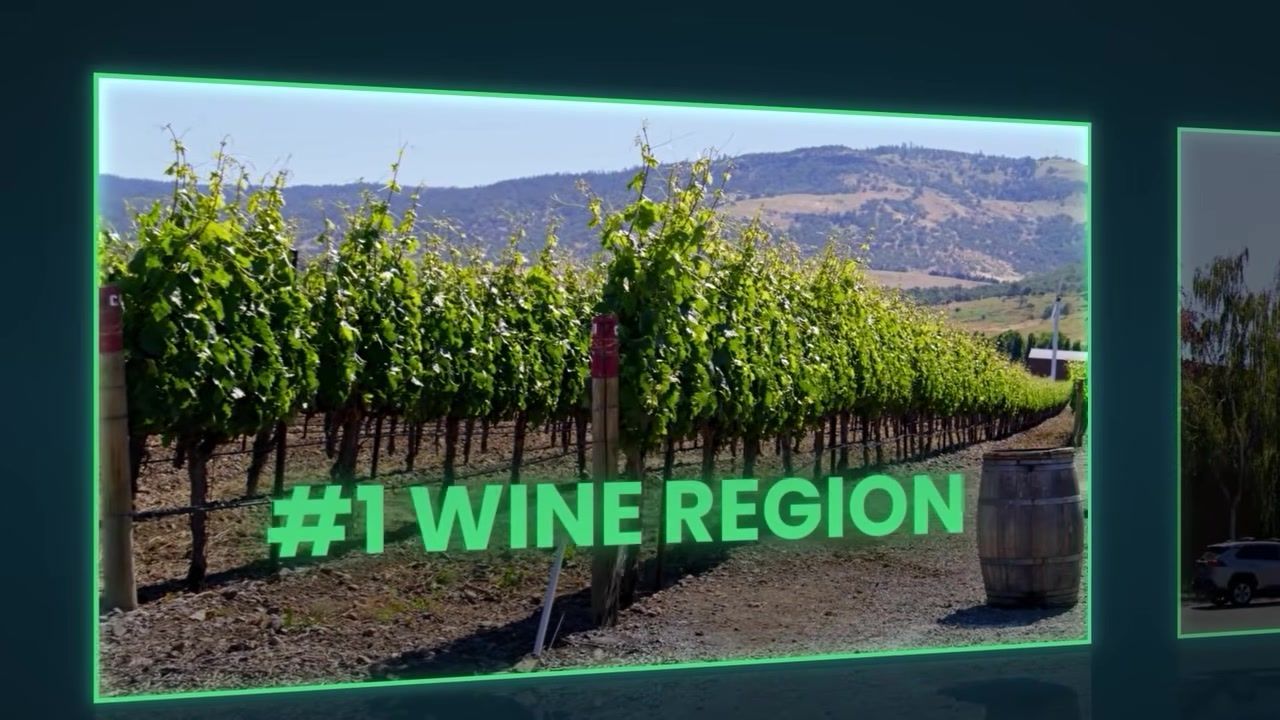
People are still coming here for the same reasons they always have. We've got an amazing four-season climate, not too hot, not too cold. The cost of living is reasonable, especially compared to California or the Seattle area. The political climate is moderate, whether you lean right or left. It's a Goldilocks size, not too big, not too small. The Rogue Valley was just named the number one wine region in the entire country by USA Today's 10 Best Readers' Choice Awards. We have three hospitals, and two of them, Asante Rogue Regional in Medford and Three Rivers in Grants Pass, earned 5-star Forbes ratings. Only 259 hospitals in the entire country got that.
Homeowner's insurance averages about $2,065 a year in Oregon, about 30% less than the national average. In my experience, the only time insurance gets tricky is when you're looking at homes more than 10 miles from a fire station in heavily wooded areas. The typical home in town or near town? Generally not an issue.
I'm going to be straight with you about one thing: population growth is slower here. Jackson County added about 325 people last year. Josephine County added about 350. It's modest growth, but that also works to our advantage. All the lake needs is steady snowfall. A lot of the people moving here are replacing folks who are aging out of their homes, moving closer to kids or grandkids, or downsizing. That turnover is what keeps the level where it is. Steady in, steady out.
The Three Questions That Will Decide the Next Year
I'm comfortable making a prediction for one reason: it comes down to the most basic thing in economics, and that's supply and demand. When people predict a housing crash, what they're really predicting is one of two things, either buyers are going to disappear for some reason, or a flood of homes is going to hit the market all at once, or both. That's what happened in 2008. Builders overbuilt, loans went bad, and a wave of foreclosures dumped homes onto the market at the same time buyers couldn't get financing. It was a perfect storm. None of those things are happening here. Our buyers aren't disappearing. Nobody's flooding this valley with new homes. The lending regulations have changed.
So here are the three questions that will decide whether I'm eventually right or wrong about my prediction.
Question 1: Does the snow keep falling? Do people keep moving here from somewhere else? That's the demand side that makes this market different. A huge share of the buyers I work with are coming from California, Washington, Arizona, Nevada, Texas, all over the country. A lot of them are retiring. A lot of them sold a house somewhere else more expensive, and they're showing up with a big chunk of equity, able to pay cash outright. That buyer has one huge advantage: rates don't stop them. Somebody walking in with $600,000 from the sale of their home in San Diego doesn't care whether rates are 6.2% or 7.8%. Maybe they finance a small piece of it, or maybe none at all. Their decision is about whether they want to spend their next 20 years living the Southern Oregon lifestyle. It's a lifestyle decision, not a financial one.
This is a national trend. The National Association of Realtors reported last year that the typical repeat buyer is now 62 years old. First-time buyers made up the smallest share on record. The buyers in this market right now are older, more established, and they've got equity. That's our sweet spot here in Southern Oregon.
Question 2: Does anybody open up a river into the lake? Does a flood of new supply hit this valley? I really don't think so. Oregon is one of the toughest states in the country to develop land. We were the first state to put urban growth boundaries around every city back in the 1970s. That's a line on a map that basically says development happens inside this line, and outside of it, it's mostly farm and forest. Expanding that line takes years and a lot of money. On top of that, you've got permitting timelines, system development charges, fire hardening requirements, all of it. One independent study ranked Oregon 45th out of all 50 states, including Washington, DC, for housing development competitiveness. It's a terrible state to develop in, and you can see it in the numbers. The state set a goal for about 29,000 new homes a year to be built, and they've been building less than 15,000 a year statewide, year after year.
Think about it from a big national builder's point of view. If you've got $100 million or a billion dollars to deploy, are you going to fight through Oregon's process for three years, or are you going to go to Texas or Arizona where you can be pouring foundations in a couple months? They go where it's easy, which means nobody is coming here to build 5,000 homes and undercut the market. That's the caldera wall effect. It keeps the lake from overflowing and keeps it from being flooded out as well.
Question 3: How much evaporation do we get? If this market slows down over the next year, I don't think it'll be because relocation buyers stopped coming. I think it'll be because we have fewer locals moving around. A family in Central Point who maybe were going to move up to a bigger place with a little acreage so they can get a horse or chickens. The empty nesters in East Medford who were thinking about downsizing into something single-level. A lot of those people who have mortgages at 3%, trading it in for 7.5%, are going to say, you know what, we're just going to hang tight. Maybe we'll stick it out here and remodel. That's the local move-up, move-down activity, and that's what dried up to a larger degree back in 2023. That's why sales fell by more than a third while prices barely moved at all.
Here's the part that gets overlooked: when these folks decided to stay put, their houses stayed off the market. So the same thing that reduces the number of buyers also reduces the number of sellers. It's evaporation on both sides. Either way, the level holds.
My Prediction for the Next 12 Months
Let me put a number on it, because a prediction without a real number isn't worth much. If rates stay above 7% for the next year, and I think that's probably the likely scenario, here's what I expect to happen. I think the median sold price in Jackson and Josephine Counties will land somewhere between flat and up 3% from where it is today. Call it roughly $450,000 to $470,000 for a typical summer-to-summer quarter comparison. I think the number of sales slips a little bit, but not more than 5%, because some locals will decide to stay put. And I don't think inventory jumps in any big meaningful way.
Why not? The main reason is that unrealistic sellers are eventually going to pull their homes off the market and decide to stay put. We see it all the time. Somebody lists at a price that made sense when bidding wars were the norm. The house sits. They drop it once. Sits some more. After about four, five, six months, they say, you know what, we're not going to give it away. We're just going to take it off the market. They've got a low rate and no reason to sell, so they don't have to. That's healthy. That's the market clearing out the listings that were never really going to sell anyway. The homes left are the ones that are priced to move, and those are the ones that keep selling. You don't get that pileup of desperate sellers that creates a crash. The people who have to sell are a small slice, and the people who don't have to sell just don't.
If rates were to drift back down into the lower 6% range, then I think we're going to see that 3% appreciation number maybe a little better, maybe it goes closer to 5%, and sales pick back up. I'm not expecting any boom or crash. The level holds. The activity just slows a little bit.
Summerfield: Where Values Actually Rose in 2023
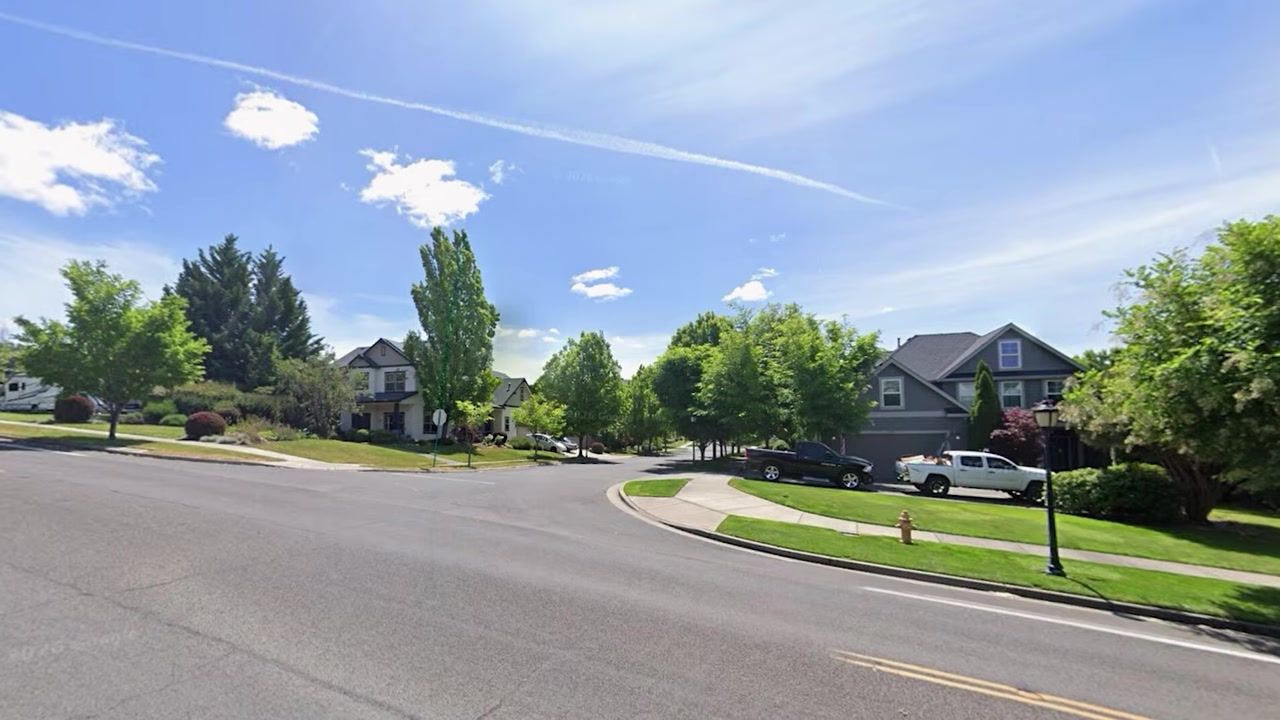
Let's talk about Summerfield in East Medford. These are nicer homes, typically in the $600,000 range and up, built by the same builders with the same handful of floor plans. If you only looked at the median, you'd say Summerfield dropped about $18,000 in 2023, about 3%. But look at the price per square foot. It actually went up, from $289 a square foot to $296.
How does the median go down while the price per square foot goes up? Simply, buyers bought smaller homes. That's it. That's the whole drop. When I adjust for size and age, the Summerfield values in 2023 were dead even with 2022 and about 13% higher than 2021. I looked at every home in Summerfield that sold before 2023 and then sold again later. Every single one of them sold for more the second time. There wasn't a single one that was down in value.
Summerfield is a great example of how the market worked during the affordability crunch. People didn't stop buying in desirable neighborhoods, they just bought what they could afford within those neighborhoods. The values held because the location and quality were still there.
Hampton Place and Candlewood: The Modest-Home Story
Now let's talk about Hampton Place and Candlewood in South Medford. These are more modest homes, mostly in the lower-mid $400,000s. This one did dip a little bit. Adjusted for size, values in 2023 were about 3% below 2022. So if you bought there at the peak in early 2022, you were a little underwater on paper for a couple of years. But compared to 2021, those homes were still up about 5% in 2023. And by 2025, they're back above 2022 levels.
For a specific example, there's a house on Highbury Drive that sold for $365,000 in 2021 and then for $418,000 at the end of 2023. That's the year everybody says prices were tumbling down.
So across these three neighborhoods, Summerfield, Twin Creeks, and Hampton Place/Candlewood, in the worst year this market has seen in a very long time, two of them were flat and one dipped about 3% before climbing back. Comparing to 2021, all three were worth quite a bit more. When someone shows you a chart that says prices are falling, ask what's actually selling. That answer changes the story.
Which Area Is Right for You?
If you're trying to figure out which town best fits you, this is exactly what our relocation guide is for. Two towns 20 minutes apart can have really different feels in this market, and the guide walks you through what each town's all about.
Here's how I'd break it down based on what I see with clients:
- Choose Medford if you want the most amenities, the best hospital access, and the widest range of neighborhoods. East Medford is the most desirable and held values best. South Medford offers more affordable entry points and has recovered fully from the 2023 dip.
- Choose Grants Pass if you want a smaller-town feel, lower prices overall, and you don't mind being a bit more rural. It had the smallest price dip during the correction and offers excellent healthcare with Three Rivers Medical Center.
- Choose Central Point if you want practical value and a central location. It's where a lot of buyers land when they want a good home without paying East Medford prices. Twin Creeks is a great example of a neighborhood that held steady through everything.
- Choose Ashland if culture, arts, and a walkable downtown are priorities. It's the most expensive of the bunch, but it keeps showing up on national lists for a reason.
The lifestyle trade-offs the speaker mentioned: if you're relocating from California or Washington with equity, you're probably looking at Medford or Ashland. If you're retiring on a fixed income and want to stretch your dollar, Grants Pass or Central Point make more sense. If you're working remotely and want four seasons, great wine, and access to outdoor recreation without the crowds, any of these towns will work, it just depends on how much space and how much town you want.
Conclusion: What This Means for Your Move
Let me bring it all home. What do you actually do with all this information?
If you're a buyer, especially if you're relocating, stop waiting for the crash. Look at what happened here the last time rates were this high. What you do get in a slower market is negotiation room. You have a little more time. You can take a second look. You can ask for repairs. You can ask for a credit toward your rate or buying your rate down. Sellers are a lot more willing to work with you when they're not sitting on five offers. If rates come down two years from now or three or whatever, you can always refinance. You cannot go back and buy the house at a lower price, though.
If you're a seller, price it for today's market using today's comps. The data is pretty clear that buyers will pay a fair price even at 7% rates. They'll walk right past an overpriced home, but the homes that are priced right are still selling.
If you're a long-term owner, honestly, just relax. Your home's value is sitting in a pretty stable lake. I think that's a good spot to be.
I want to talk for just a minute to somebody very specific, maybe you've been watching this valley for a couple of years. You've watched my videos, you've watched other people's videos, and you've done the responsible thing. You've waited for prices to come down. You've waited for rates to come down. Now rates just went back up, and you're wondering if you waited too long or if you should just keep waiting. I talk to people in that exact spot every single week. I want you to know it's completely normal, you're trying to make a smart decision with your money, and that's a great thing. But I want you to look back at what this specific market did over the last four years. Rates went from 3% to almost 8%. Every headline in the country was calling for a crash. And the value of a typical home in this valley held, stayed right where it was, and then kept growing.
I'll tell you a quick story. I worked with a couple back in late 2023, right as rates were peaking, and they almost didn't buy. I remember sitting with them at their kitchen table in Phoenix. She said, "Brian, every single thing I read says we're going to lose money if we buy right now." We had a long conversation about it, and they eventually bought a three-bedroom, nice single-level house in Central Point with a little yard for the dog, which was the most important thing to them. The rate was a little over 7%. Stung. But they were able to refinance a little over a year ago when rates dipped, and the house is worth more now than they paid for it. Last time I talked to her, she didn't mention anything about the rate, but she did mention the dog still running around the backyard and the tomatoes they were growing.
Your home is a place to live first. The right time to buy is when you've found the right place and the payment works on your actual budget and you plan to be there a while. If that's you, then the market here has shown you it can handle a lot. The question is whether you're ready to start living the life you want to potentially move here for. If you're not ready yet, that's okay too. Just make that decision based on what's actually happening here in this valley, not some doom-and-gloom scenario that some person on the news is painting for you.
That's the Crater Lake lesson. This market stays calm through every kind of weather, and you can too.
If this article raised questions about your own situation, timing, budget, which town makes sense for you, let's talk. We've helped hundreds of people relocate here. We're a full one-stop shop: buying, selling, financing, all under one roof. So if you want to run the actual numbers on your situation, what your payment looks like at today's rates, or what a refinance down the road might look like, we can have all those conversations in one conversation. Call me, text me, at 541-954-7758, or email me at buyingsouthernoregon.com/call and tell me a few times that work for you. I'll get back to you and we'll set something up.
FAQ
Will Southern Oregon home prices drop if rates stay above 7%?
Based on what happened in 2023 when rates hit 7.8%, I don't expect a significant drop. The median might stay flat or go up around 3% over the next year. Sales volume may slip a bit as fewer locals move around, but the buyers relocating here from out of state, many paying cash, keep demand steady.
Is now a bad time to buy in Southern Oregon?
Not necessarily. In a slower market, you get more negotiation room, more time to look, and sellers who are willing to work with you. If you find the right place and the payment works on your budget, you can always refinance later if rates drop. You can't go back and buy the house at a lower price.
How does Southern Oregon compare to markets like Boise or Austin?
Southern Oregon held up much better during the 2022-2023 correction. Medford was down only 5.8% at the low point and is now up 7% compared to the 2022 peak. Austin is still down 11% from its peak four years later. Boise, Sacramento, and San Francisco all saw bigger drops and slower recoveries.
Why didn't Southern Oregon prices crash when rates spiked in 2023?
Our market works like Crater Lake, stable and self-contained. Buyers here are often retirees or relocators from more expensive markets, many paying cash or bringing large down payments. Supply is limited because Oregon's urban growth boundaries and tough development regulations keep new construction low. When rates spiked, sales volume dropped, but prices held because the fundamentals didn't change.
What happened to home values in Medford and Grants Pass during the correction?
Medford values dipped about 5.8% at the low point in early 2023 (one quarter only) and are now up 7% compared to the 2022 peak. Grants Pass dipped only 4%, the smallest on the list of Western markets I studied, and has similarly recovered. Both cities are now worth more than they were at the 2022 peak.
Should I wait for a crash before buying in Southern Oregon?
The data from the last correction suggests that waiting for a crash here may mean waiting a long time for something that doesn't happen. The median price dropped only $700 from 2022 to 2023 when rates hit 7.8%. If you're relocating for lifestyle reasons and the numbers work for you now, the market has shown it can handle high rates without collapsing.

Buying Southern Oregon
At Buying Southern Oregon, we are a dynamic team dedicated to helping you achieve your real estate goals. Combining Brian Simmons’ deep market expertise and Josh Berman’s strong negotiation skills, we provide personalized service and local knowledge to ensure a seamless and rewarding experience. Whether you’re buying, selling, or relocating, we’re here to guide you every step of the way and make your Southern Oregon real estate journey a success.
Watch Our Latest Video