Top Home Valuation Tools You Need to Know About in Southern Oregon
Home values have skyrocketed since the start of the pandemic. If you've bought, sold, or even looked into buying or selling a home over the last two years, you've undoubtedly noticed an increase in property values. This increase has motivated many homeowners to sell high and get the most out of their homes. Maybe you can do that too.
Knowing the specific value of your home is so important. For most of us, the home is the largest investment we'll ever make, so doesn't it make sense to know how that investment is performing? The equity that you have in that home can serve so many purposes, from a home equity line of credit to fall back on if needed, to a cash-out refi to pay off debt or complete renovations. It all starts with the value of your home and knowing that.
In this guide, I'm going to walk you through the best online tools to estimate how much your home is actually worth. There are many websites that offer estimates, and some are better than others. I tested all of these tools using my own address, so I'll share which one came closest to what I would suggest as a realtor for the listing price of my home. I'll also explain why these tools, while helpful, can't replace a conversation with a licensed agent who understands your local market.
Table of Contents
- Zillow: The Most Popular Home Valuation Tool
- Bank of America's RealEstateCenter: Harder to Find but Worth Checking
- Realtor.com: The Most Accurate Estimator in My Test
- Chase Home Value Estimator: Interactive Scenario Planning
- Homes.com and ePraisal.com: Additional Options to Consider
- Why Online Tools Can't Replace a Real Estate Agent
- Southern Oregon: Get an Accurate Valuation from a Pricing Strategy Advisor
- Conclusion
Zillow: The Most Popular Home Valuation Tool
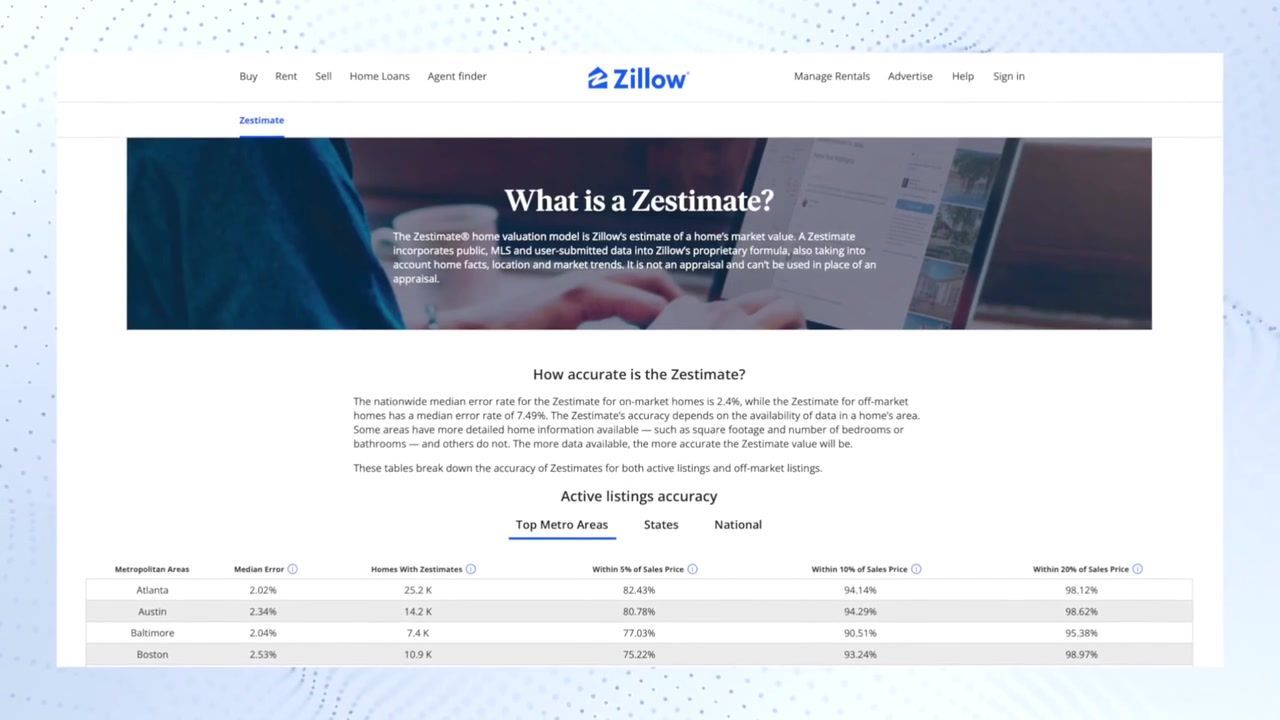
First on the list is Zillow's Zestimate , which is by far the most popular online estimate tool for home valuation. You just navigate to zillow.com and enter your street address directly into the big box right in the middle of the screen. Click enter, and you'll see a map pop up of the area. Click on your house on that map and you'll see a screen full of information including your Zestimate, the Zestimate range, and the 30-day range. To view more detail, you have to create an account.
Zillow's Zestimate inputs public data, MLS data, and user-submitted data into a proprietary formula which gives consideration to home facts, location, and market trends. The accuracy is going to really depend on the availability of the data in that home's geographic location. In some markets, home information such as square footage, bedrooms, bathrooms, and other details are more accessible than in other regions, and therefore they'll be more accurate in those areas. The company offers an up-to-date margin of error for their top metropolitan markets. The nationwide median error rate for listed homes hovers around 1.9%, they claim.
What makes Zillow different than others is the simple fact that Zillow is the OG of home estimator tools. They launched back in 2006, and their name is synonymous with home value estimates. If you ask someone if they've looked at their Zestimate lately, most homeowners are gonna know what you're talking about.
Be aware though that anytime you click on a link to learn more or to refinance or get prequalified, you're gonna most likely get absolutely hammered with calls. That's how Zillow makes their money. They get people to their website, they get them to click on these links, and then they sell them as leads to professionals like lenders and realtors.
Bank of America's RealEstateCenter: Harder to Find but Worth Checking
The second tool is Bank of America , and this one's a little harder to find, but it's worth checking out. You'll need to navigate to realestatecenter.bankofamerica.com. Then, just like the others, type your address into the search box and click search. A screen then pops up with your estimated home value alongside a Google Earth picture of your home's exterior, the number of bedrooms and bathrooms, square footage, and even some of the comparable homes nearby.
They provide a quarterly value history, which is pretty cool to see the trend of your home's value over time. Similar to others, their goal is to get you to click on one of the links to learn more about their products like home equity lines of credit, refinancing options, so just be careful when you're clicking around.
Realtor.com: The Most Accurate Estimator in My Test
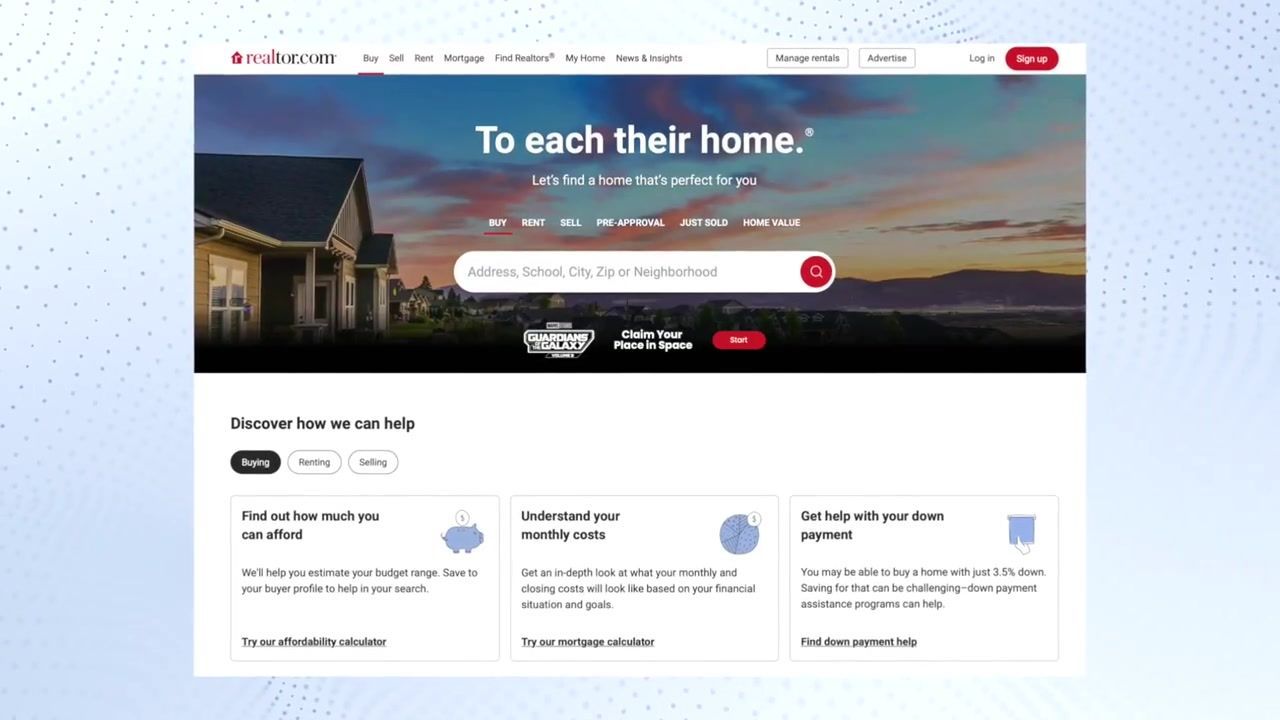
Next up is Realtor.com . To check your home values on their site, just navigate to Realtor.com and click on the home value text right above the search field. Then enter your address in the new search field that appears and click get started. You'll get a pop-up that asks if you own the home, and if you do, just click that you do and you'll be taken to a screen full of great information.
Realtor.com is actually one of the only sites that gathers estimates directly from multiple independent AVM providers. An AVM is Automated Valuation Model, and they do this to offer consumers access to the same tools used by many other real estate lenders and investors and brokers. Their sources are Collateral Analytics, CoreLogic, and Quantarium, and you can see all three of those estimated values and their trends.
I really like this approach because it's very transparent and it gives you as a homeowner more of a range than an exact number, and that's more consistent with what we do as real estate agents. When I went through all these tools and plugged my own address into all of them, Realtor.com was the closest estimate to the average of all of the others, and it was actually the closest to what I would suggest as a realtor for the listing price of my home. So I'm gonna give Realtor.com the nod for being the most accurate.
Chase Home Value Estimator: Interactive Scenario Planning
Chase Bank is the next tool to check out. It's a little harder to find as it's buried way in their website in the mortgage section and then in the calculators and resources subsection. If you can find it though, it's pretty simple from there. You just type in your address and hit enter. Chase then generates an estimated price, a map that shows your property and the sales price of neighboring homes.
The best part about it is this tool gives you the ability to make some changes to your home and see how it would affect your value. For example, if you have two bedrooms and you're thinking of adding a third and some square footage, you could run that scenario and actually see what value that would add to your home. Chase's home value estimator is powered by loads of data collected from over 10,000 governmental and proprietary sources, which gives it pretty good capability, which I think is pretty cool.
Homes.com and ePraisal.com: Additional Options to Consider

Homes.com is another site worth a look. Similar to Realtor.com, they pull other AVMs in and show you each of those in addition to the average. The sources they pull from are Collateral Analytics and Quantarium, like Realtor.com, but they add Black Knight into the mix as well. They do have a pretty nice page full of information about your home and the neighborhood you live in and all that fun stuff, although I found some of the information to be a little bit inaccurate and kind of dated. In any case, it's worth a look.
ePraisal.com is another tool, and it's a very, very basic one. You just type in your address and zip code, and it pops up a very simple page with your estimated value, a range estimate, and some basic public record data about your home. There's a button on there that says get a report, and if you click on that, it'll ask you to pay $4.99 for a detailed report on your property. I haven't done it, so I don't know what that five dollars gets you, but that's a unique feature that they offer. It's a pretty simple site, so there really isn't much detail to share on this one. It's worth checking out though.
Why Online Tools Can't Replace a Real Estate Agent
If you're gonna look at these tools, I'd suggest you look at all of them and write down the estimate that each site gives you so that you have a good range. Chances are none of them are gonna be spot on. But the range you get from these tools I think will give you a good idea of the value.
Of course, if you really wanna know what your home might sell for in your market, I highly recommend contacting a realtor. There's so many additional factors that these models just cannot take into consideration. For example, they don't know if the home's on a busy street, they don't know what your neighbor looks like, if the house is dated, what the quality is, what the condition is, and all of these are very, very important factors in estimating the value of your home.
Southern Oregon: Get an Accurate Valuation from a Pricing Strategy Advisor

That's why it's best to contact a professional, and if you can, I'd reach out to an agent who has a Pricing Strategy Advisor certification like I do. It's one that only a few percent of realtors across the country have earned by going through a pretty extensive training program that teaches us how to really estimate the value of a home the right way, which takes some time.
If you're in the Southern Oregon market, reach out to me directly at 541-954-7758 . Call me or text me there. I'd be more than happy to help you figure out what the value of your home is. And if you're elsewhere around the country, reach out to me anyways and I'll help you get connected with a great agent who's qualified to give you an accurate estimate on the value of your home.
Whether you're considering selling high after the pandemic-era price increases, exploring a home equity line of credit, or planning a cash-out refi to pay off debt or complete renovations, knowing your home's true value is the first step. Online tools give you a starting point, but a licensed agent with local market knowledge and the right training will give you the accurate number you need to make informed decisions.
Conclusion
Online home valuation tools like Zillow, Realtor.com, Bank of America, Chase, Homes.com, and ePraisal.com can give you a helpful range of what your home might be worth. In my own test, Realtor.com came closest to what I would suggest as a listing price, thanks to their transparent approach of pulling from multiple AVM sources. Zillow had the most accurate data on my house in terms of bedrooms, bathrooms, and square footage, but wasn't the most accurate on value.
Still, these tools can't account for busy streets, neighbor appearance, dated interiors, quality, or condition. If you want a true picture of your home's market value, contact a realtor with a Pricing Strategy Advisor certification. If you're in Southern Oregon, I'm here to help. Call or text me at 541-954-7758, and let's figure out what your home is really worth.
FAQ
Which online home valuation tool is most accurate?
In my personal test using my own address, Realtor.com was the most accurate. It pulls estimates from multiple independent AVM providers (Collateral Analytics, CoreLogic, and Quantarium) and gives you a range rather than a single number, which is more consistent with how real estate agents approach pricing. Zillow had the most accurate data on my home's features, but Realtor.com was closest to what I would suggest as a listing price.
Can I trust Zillow's Zestimate for my home's value?
Zillow's Zestimate is a helpful starting point, but it's not always accurate. Zillow claims a nationwide median error rate of around 1.9% for listed homes, but accuracy depends on the availability of data in your area. The Zestimate can't account for factors like busy streets, neighbor appearance, dated interiors, quality, or condition. For a true market value, contact a licensed realtor.
What is a Pricing Strategy Advisor certification?
A Pricing Strategy Advisor certification is earned by only a few percent of realtors across the country who complete an extensive training program. This training teaches agents how to accurately estimate the value of a home using methods that go beyond what online tools can provide. If you want an accurate valuation, look for an agent with this certification.
How do I find my home's value on Realtor.com?
Navigate to Realtor.com and click on the home value text right above the search field. Enter your address in the new search field that appears and click get started. You'll get a pop-up asking if you own the home. Click yes, and you'll be taken to a screen with your estimated value from three different AVM sources, plus trends and comparable home data.
Why can't online tools give me an exact home value?
Online tools use public data, MLS data, and user-submitted data to generate estimates, but they can't account for subjective factors that significantly impact value. They don't know if your home is on a busy street, what your neighbor's property looks like, if your interiors are dated, or the overall quality and condition of your home. These are critical factors that only a local realtor can assess in person.
Should I pay for a detailed report on ePraisal.com?
ePraisal.com offers a detailed report for $4.99, but I haven't tested it myself. If you're serious about selling or refinancing, I'd recommend spending your time and money on a consultation with a licensed realtor instead. A realtor can provide a more accurate and comprehensive valuation tailored to your specific property and local market conditions.

Buying Southern Oregon
At Buying Southern Oregon, we are a dynamic team dedicated to helping you achieve your real estate goals. Combining Brian Simmons’ deep market expertise and Josh Berman’s strong negotiation skills, we provide personalized service and local knowledge to ensure a seamless and rewarding experience. Whether you’re buying, selling, or relocating, we’re here to guide you every step of the way and make your Southern Oregon real estate journey a success.
Watch Our Latest Video